Why Rest Feels Impossible When You’re Anxious
You finally have a free afternoon.
No appointments. No obligations. Nowhere to be. You’ve been waiting for this — a pocket of time to just rest, decompress, exhale.
And then you sit down. And your brain immediately starts running.
The emails you haven’t answered. The thing you said last Tuesday that you’re still replaying. The to-do list that’s somehow longer than it was this morning. The vague but persistent feeling that you should be doing something — even though you can’t name what that something is.
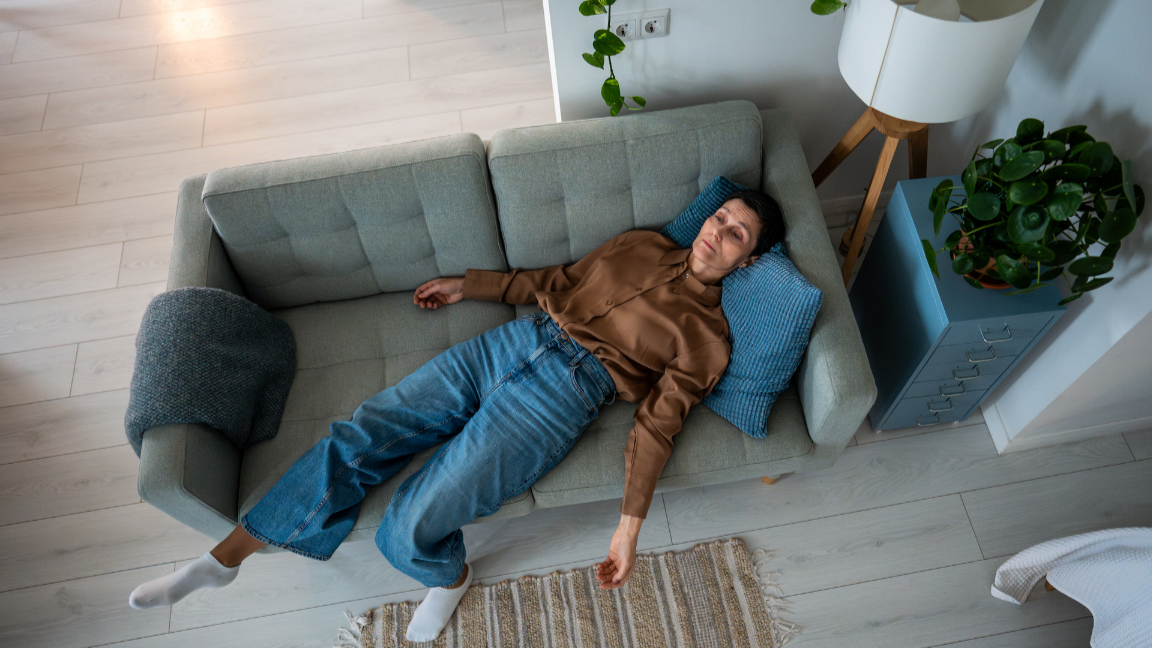
The afternoon slips by. You scroll, you half-watch something, you find a small task to do. And when it’s over, you don’t feel rested. You feel like you wasted it.
If this sounds familiar, I want you to know something: this isn’t a character flaw. It isn’t laziness in reverse. It isn’t you being incapable of slowing down. It’s anxiety. And there’s a very specific reason it makes rest feel impossible — even when you desperately want it.
Your Nervous System Doesn’t Know theThreat Is Gone
Anxiety isn’t just a mental experience. It’s a full-body physiological state — one that evolved to protect you from danger. When your nervous system detects a threat (real or perceived), it activates your sympathetic nervous system — the fight-or-flight response.
Your heart rate increases
your muscles tense
your senses sharpen
your brain shifts into high-alert mode.
Your body is preparing you to act.

The problem is that modern anxiety doesn’t usually involve a tiger.
It involves an inbox, a difficult relationship, financial stress, a relentless to-do list, or simply the accumulated weight of trying to hold everything together. The threat is never really gone — it just changes shape.
So your nervous system stays activated. It keeps scanning for danger. It keeps sending the signal: not safe yet. Not yet. Keep going.
Rest requires the opposite signal. It requires your parasympathetic nervous system — the rest-and-digest response — to take over. And when you’ve been in high alert for a long time, that switch doesn’t just flip because you sat down on the couch.
Your body doesn’t know the afternoon is free. It’s still bracing.
Why Stillness Can Actually Feel Worse
Here’s something that surprises a lot of the women I work with: when you’re chronically anxious or burned out, stillness can genuinely feel more uncomfortable than staying busy.
This isn’t irrational. When you’re in motion — working, managing, solving, doing — you have a sense of control. You’re addressing the threat. The anxiety has somewhere to go.
But when you stop? The anxiety doesn’t stop with you. It’s still there — now without the distraction of productivity to contain it. Suddenly, you’re sitting alone with all the things you’ve been too busy to feel. The worry. The exhaustion underneath the exhaustion. The questions you’ve been avoiding.

But when you stop? The anxiety doesn’t stop with you. It’s still there — now without the distraction of productivity to contain it.
Suddenly, you’re sitting alone with all the things you’ve been too busy to feel. The worry. The exhaustion underneath the exhaustion. The questions you’ve been avoiding.
No wonder your brain reaches for your phone. No wonder you find a task. No wonder you can’t just... stop.
It’s not that you don’t want to rest. It’s that rest has started to feel unsafe.
The Guilt That Comes With It

And then there’s the layer on top of all of that: the guilt.
You finally have time to rest and you’re not resting — and now you feel bad about that too. So you’re anxious that you can’t relax, and ashamed that you’re anxious, and frustrated at yourself for wasting the free time you’ve been waiting for.
This is an exhausting loop. And it’s one that a lot of high-achieving, caring, capable women find themselves in — women who look absolutely fine from the outside and are quietly white-knuckling it on the inside.
I want to name something clearly here: the guilt is not helping you rest. Criticizing yourself for being unable to relax does not make relaxing easier. It makes your nervous system more activated, not less.
You are not failing at rest. You are experiencing something that has a real physiological explanation — and a real path forward.
What Actually Helps (And What Doesn’t)
The advice you’ve probably heard — just breathe, take a bath, put your phone down, practice self-care — isn’t wrong, exactly. But it’s incomplete. It addresses the surface without touching what’s underneath. What actually helps is working with your nervous system, not against it.
A few things that research and clinical practice support:
— MOVEMENT BEFORE STILLNESS
If your nervous system is activated, sitting still first is often the hardest possible entry point. Try a short walk — even 10 minutes — before you attempt to rest. Movement metabolizes stress hormones and gives your fight-or-flight response somewhere to go. It’s much easier to settle into stillness when your body has discharged some of its energy first.
— GENTLE SENSORY GROUNDING
Anxiety lives largely in the mind — in the future, in the what-ifs, in the replay of past conversations. Grounding techniques work by bringing your attention back into your body and the present moment. Hold a warm cup of tea. Feel the texture of a blanket. Notice five things you can see from where you’re sitting. These aren’t magic — but they give your nervous system a different signal to work with.
— LOWERING THE STAKES OF REST
Part of what makes rest feel so loaded is that we’ve turned it into a performance. Rest is supposed to look a certain way — peaceful, restorative, phone-free. But when you’re anxious, that pressure makes it worse. Try removing the expectation entirely. You’re not trying to rest perfectly. You’re just trying to do one thing that isn’t productive. That’s it.
— ADDRESSING THE UNDERLYING ANXIETY
This is the part that the bubble baths can’t reach. If anxiety is chronically preventing you from resting — if you’ve tried the tips and you still can’t seem to let yourself stop — that’s a signal worth paying attention to. Not because something is wrong with you, but because anxiety that pervasive is usually connected to something deeper: patterns of overthinking, people-pleasing, perfectionism, or nervous system dysregulation that developed over years. These respond very well to therapy. They don’t tend to respond well to tips.
A Note to the Woman Who Is Exhausted by Her Own Mind
If you’ve read this far, I’m guessing this resonates. You are probably someone who holds a lot together. Who shows up for everyone. Who looks capable and competent from the outside, while quietly wondering why she can’t just relax like a normal person.

I want you to hear this: there is nothing wrong with you.
Your nervous system learned to stay alert because at some point, staying alert kept you functioning. It’s trying to help you. It just doesn’t know when to stop.
Learning to rest — really rest, not just go through the motions of it — is possible. But it usually involves more than tips. It involves understanding why your nervous system got stuck in the first place, and gently, consistently teaching it that it’s safe to let go.
That’s work that’s worth doing. And you don’t have to figure it out alone.